

Complete Guide to Microbusiness Models Explained
More than 90 percent of all american businesses operate at the micro level, shaping local economies in ways that rarely make headlines. While these tiny ventures may have just a handful of employees, their flexible models and streamlined setups empower thousands to turn skills or passions into reliable income. Understanding what sets microbusinesses apart gives aspiring entrepreneurs the practical insight they need to choose a sustainable and rewarding path.
Table of Contents
- Defining Microbusiness Models And Core Principles
- Popular Microbusiness Types And Structures
- How Microbusinesses Operate Day-To-Day
- Start-Up Requirements And Essential Tools
- Benefits, Risks, And Common Pitfalls
Key Takeaways
| Point | Details |
|---|---|
| Definition of Microbusinesses | Microbusinesses are very small companies, typically family-owned, with fewer than five employees and low operational costs. |
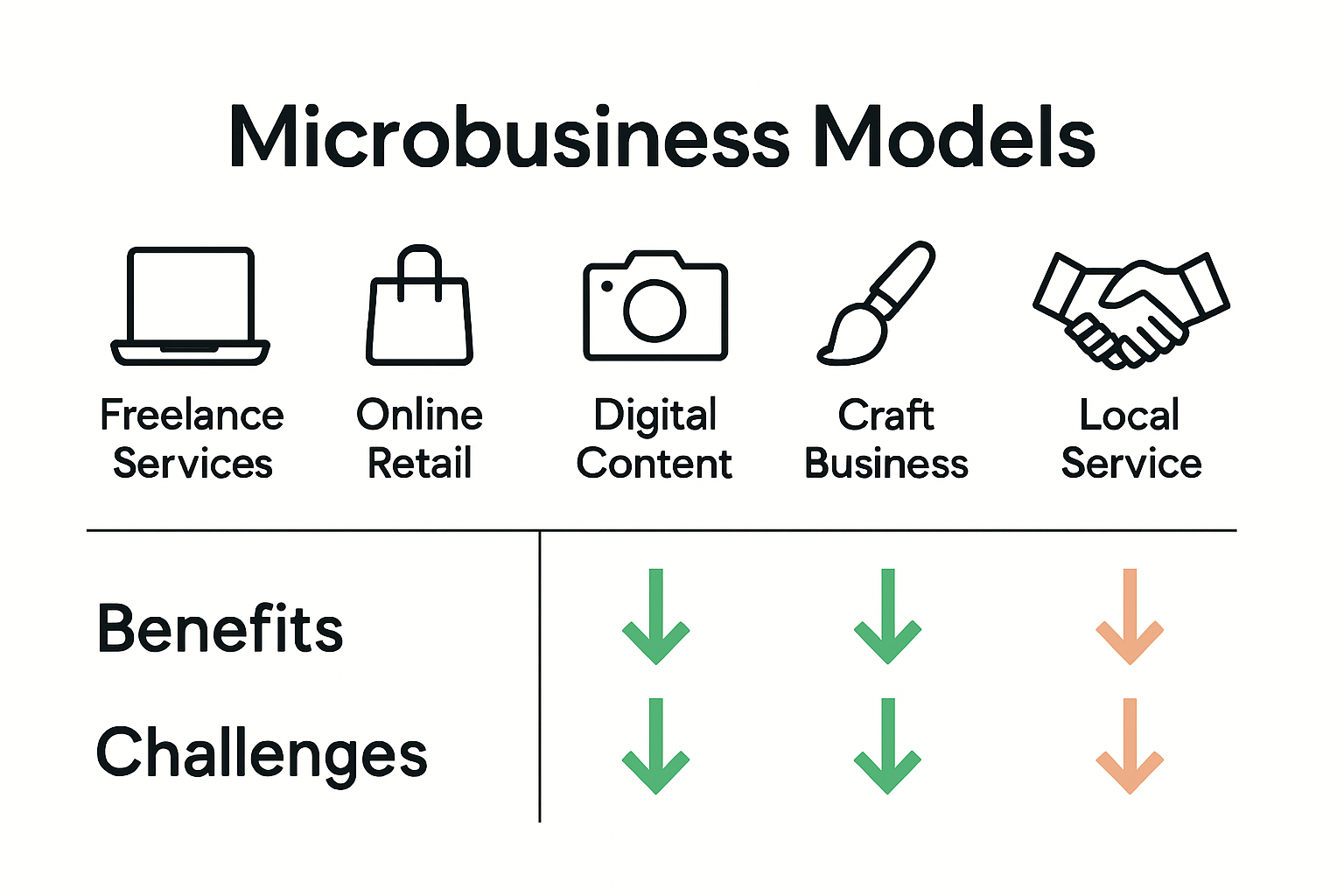
| Operational Models | Common types include freelance services, online retail, digital content creation, and local services, allowing for diverse income opportunities. |
| Day-To-Day Operations | Successful microbusinesses focus on client acquisition, service delivery, financial management, and leveraging technology for efficiency. |
| Benefits and Risks | While they offer flexible schedules and low startup costs, microbusinesses face risks like inconsistent income and market volatility; awareness and resilience are key to success. |
Defining Microbusiness Models and Core Principles
A microbusiness represents the smallest tier of entrepreneurial ventures, typically characterized by minimal operational scale and personalized management. According to the Cambridge Dictionary, a microbusiness is a very small company, often family-owned, employing only a few people.
The core characteristics of microbusinesses distinguish them from larger business models. These enterprises generally operate with fewer than five employees, maintain low startup and operational costs, and frequently emerge from individual skills, passions, or professional expertise. Uowoajournals highlights their significant economic contribution, suggesting these tiny enterprises play a crucial role in driving local economic innovation and providing flexible income opportunities.
Microbusiness models encompass diverse formats, ranging from online freelancing and digital service provision to small-scale product creation and local service offerings. Key attributes include:
- Minimal initial capital investment
- Highly flexible operational structures
These businesses often leverage digital platforms and technology to reduce overhead, allowing entrepreneurs to transform personal skills into sustainable income streams. For single mothers seeking financial independence, why start a business from home can provide a strategic pathway to professional and economic empowerment.
Successful microbusiness models typically emerge from identifying specific market needs, developing specialized skills, and creating targeted solutions that can be delivered efficiently through digital or localized channels. Understanding these foundational principles enables aspiring entrepreneurs to design adaptable, low-risk business strategies tailored to their unique circumstances and capabilities.
Popular Microbusiness Types and Structures
Microbusinesses span a diverse range of operational models, each offering unique opportunities for entrepreneurs seeking flexible and scalable income streams. Wikipedia highlights the significant economic contributions of these tiny enterprises across various sectors, demonstrating their adaptability and potential for growth.
The most prevalent microbusiness types include:
- Freelance Services: Digital professionals offering writing, design, programming, marketing, and consulting services
- Online Retail: Small e-commerce stores selling handmade, curated, or dropshipped products
- Digital Content Creation: Bloggers, YouTubers, podcasters, and social media influencers monetizing digital platforms
- Local Service Providers: Tutors, personal trainers, beauty professionals, and home-based service specialists
- Craft and Handmade Businesses: Artisans selling handcrafted goods through online marketplaces
According to research on very small businesses, these microbusiness structures typically share common characteristics such as limited employee count, low operational overhead, and highly personalized management approaches. For single mothers seeking economic independence, entrepreneurship step by step guides can provide critical insights into launching and scaling these nimble business models.
Successful microbusiness models leverage technology, personal expertise, and targeted market positioning to create sustainable income opportunities. By understanding these diverse structures, entrepreneurs can select and develop business approaches that align with their skills, resources, and lifestyle constraints, transforming personal passions into viable economic ventures.

How Microbusinesses Operate Day-To-Day
Knowledge entrepreneurship forms the core operational strategy for most microbusinesses, where individual entrepreneurs transform specialized skills and insights into sustainable economic opportunities. According to Wikipedia, these businesses leverage intellectual capital as their primary asset, creating value through targeted expertise and innovative problem-solving approaches.
Typical daily operations for microbusinesses involve several key activities:
- Client acquisition and relationship management
- Service/product development and delivery
- Financial tracking and invoicing
- Marketing and self-promotion
- Continuous skill enhancement and learning
Microfranchising research suggests that successful microbusinesses often adopt replicable operational models that allow for scalability and consistent performance. For single mothers seeking flexible entrepreneurial paths, entrepreneurship step by step guides can provide critical insights into managing these multifaceted responsibilities.
Technology plays a transformative role in microbusiness operations, enabling entrepreneurs to streamline administrative tasks, manage digital platforms, and connect with global markets from home. By integrating efficient digital tools and maintaining disciplined workflow management, microbusiness owners can create structured yet flexible work environments that accommodate personal and professional responsibilities simultaneously.
The key is developing adaptive systems that maximize productivity while preserving personal well-being and work-life balance.
Start-Up Requirements and Essential Tools
Microbusiness startup demands a strategic approach to resource allocation and tool selection. According to research from Abacademies, successful microenterprises critically depend on aligning their business model practices with operational strategies, making careful planning and tool selection paramount for sustainable growth.
Essential startup requirements for microbusinesses include:
- Minimal initial capital investment (typically $500-$5,000)
- Reliable computer or smartphone
- High-speed internet connection
- Basic accounting and invoicing software
- Professional website or digital portfolio
- Business registration and legal compliance documents
- Personal branding and marketing resources
Technology plays a crucial role in modern microbusiness infrastructure. Digital tools enable entrepreneurs to manage multiple functions efficiently, including:
- Cloud-based project management platforms
- Online payment processing systems
- Customer relationship management (CRM) software
- Social media marketing tools
- Productivity and time-tracking applications
For single mothers seeking entrepreneurial opportunities, why start an online business can provide critical guidance on navigating these initial setup challenges. The key to successful microbusiness launch lies in selecting versatile, cost-effective tools that maximize operational efficiency while minimizing upfront financial investment.
 By strategically leveraging digital resources and maintaining a lean operational approach, entrepreneurs can create robust business foundations that adapt and scale with their evolving professional goals.
Benefits, Risks, and Common Pitfalls
Microbusinesses represent both an exciting opportunity and a complex entrepreneurial journey. According to Wikipedia’s entry on micro-enterprise, these small ventures play a critical role in economic development, particularly in creating job opportunities and generating alternative income streams for entrepreneurs.
Key benefits of microbusinesses include:
- Flexible work schedules
- Low initial investment requirements
- Personal skill monetization
- Minimal overhead costs
- Potential for rapid scaling
- Enhanced work-life integration
- Direct control over business direction
Research on very small businesses highlights that while these enterprises offer significant advantages, they also face substantial challenges. Common risks and pitfalls entrepreneurs must navigate include:
- Inconsistent income streams
- Limited access to traditional financing
- High vulnerability to market fluctuations
- Complex self-employment tax obligations
- Potential for burnout
- Difficulty separating personal and professional boundaries
For single mothers exploring entrepreneurial paths, why start an online business can provide strategic insights into mitigating these risks. Success ultimately depends on developing resilience, maintaining financial discipline, and continuously adapting to changing market dynamics. By understanding potential challenges and proactively developing robust strategies, microbusiness owners can transform potential obstacles into opportunities for growth and personal empowerment.
Empower Your Microbusiness Journey with Proven Strategies
Starting and managing a microbusiness means facing real challenges like inconsistent income, limited resources, and juggling multiple roles. This guide highlights how crucial it is to master flexible business models, use the right tools, and develop skills that align with your unique situation. Single mothers striving for financial independence need support designed specifically for these obstacles.
Take control of your future today with Prosperual, where our flagship digital product, “Thrive and Prosper,” offers practical steps to build your business from home. Discover how to leverage technology, manage finances, and grow your skills with expert guidance tailored to your journey. Start now by exploring our insights on why start an online business and follow detailed entrepreneurship step by step guides crafted to help you succeed. Your path to confidence and economic freedom begins at Prosperual.
Frequently Asked Questions
What is a microbusiness?
A microbusiness is a very small company, often family-owned, typically with fewer than five employees and minimal operational scale. They often emerge from individual skills and passions.
What are some common examples of microbusiness models?
Common examples of microbusiness models include freelance services, online retail, digital content creation, local service providers, and craft or handmade businesses.
What are the essential startup requirements for a microbusiness?
Essential startup requirements for a microbusiness typically include minimal capital investment, a computer or smartphone, high-speed internet, accounting software, a professional website, and marketing resources.
What are the main benefits and risks associated with starting a microbusiness?
The main benefits of starting a microbusiness include flexible work schedules and low initial investment, while risks include inconsistent income, limited financing options, and potential burnout.