

What Is E-Commerce Business? Complete Guide
Did you know that global e-commerce sales have surpassed $5 trillion and are rising every year? Online businesses have opened new doors for entrepreneurs by cutting out physical barriers and giving anyone a chance to reach customers worldwide. For single mothers who need flexibility, understanding how e-commerce works is a powerful step toward earning reliable income from home with lower costs and higher freedom than most traditional jobs.
Table of Contents
- Defining E-Commerce Business and Core Concepts
- Major Types of E-Commerce Models Explained
- How Online Selling and Transactions Work
- Benefits and Challenges of E-Commerce Business
- Legal, Tax, and Compliance Requirements
Key Takeaways
| Point | Details |
|---|---|
| E-Commerce Definition | E-commerce allows for online sales of products and services without physical store limitations, encompassing B2B and B2C transactions. |
| Types of E-Commerce Models | Four primary models exist: B2C, B2B, C2C, and C2B, each offering distinct opportunities for entrepreneurs. |
| Challenges and Benefits | E-commerce offers global reach and lower costs, but requires navigation of cybersecurity and compliance issues. |
| Legal Compliance | Entrepreneurs must understand legal obligations, including business registration and tax requirements, to operate successfully. |
Defining E-Commerce Business and Core Concepts
E-commerce represents a transformative digital business model that allows entrepreneurs to sell products and services online without traditional brick-and-mortar limitations. According to UNESCO’s official definition, e-commerce involves ordering and delivering products through electronic means like the internet or computer-mediated networks, encompassing both business-to-business (B2B) and business-to-consumer (B2C) transactions.
At its core, an e-commerce business operates by creating digital storefronts where customers can browse, select, and purchase products or services entirely online. These digital platforms eliminate geographical restrictions, allowing entrepreneurs to reach global markets with minimal overhead costs. Key features of successful e-commerce businesses include:
- Intuitive website design
- Secure payment gateways
- User-friendly product catalogs
- Efficient inventory management
- Streamlined shipping and logistics
For single mothers seeking flexible income opportunities, e-commerce represents an incredible pathway to entrepreneurship. Unlike traditional retail, online businesses can be managed from home, providing the flexibility needed to balance work and family responsibilities. Whether selling handmade crafts, digital products, or dropshipping merchandise, e-commerce empowers women to create sustainable income streams without compromising their primary caregiving roles. The digital landscape offers numerous platforms and tools that make starting an online business more accessible than ever before, requiring minimal upfront investment and offering scalable growth potential.
Major Types of E-Commerce Models Explained
According to research from Coursera, e-commerce businesses typically fall into four primary transaction models that define how businesses and consumers interact online. Business to Consumer (B2C) remains the most familiar model, where businesses sell directly to individual customers through digital platforms like online retail stores, streaming services, and digital product marketplaces.
Business to Business (B2B) represents another significant e-commerce model where companies sell products or services to other businesses. As detailed by GeeksforGeeks, this model involves wholesale transactions, software services, and enterprise-level solutions. Examples include:
- Software licensing platforms
- Wholesale supply chains
- Professional service marketplaces
- Industrial equipment suppliers
- Corporate training resources
Two additional emerging models offer unique entrepreneurial opportunities. Consumer to Consumer (C2C) platforms enable individuals to sell directly to other consumers, typically through auction sites or peer-to-peer marketplaces. Consumer to Business (C2B) represents an innovative model where individuals offer services or products to businesses, such as freelance work, stock photography, or consulting services. For single mothers seeking flexible income streams, these models provide unprecedented opportunities to monetize skills, talents, and resources without traditional employment constraints.
Here’s a summary of the four major e-commerce business models:
| E-Commerce Model | Description | Examples |
|---|---|---|
| B2C (Business to Consumer) | Businesses sell to individual customers | Online retail stores Streaming services Digital marketplaces |
| B2B (Business to Business) | Businesses sell to other businesses | Software licensing Wholesale platforms Corporate training |
| C2C (Consumer to Consumer) | Consumers sell to other consumers | Auction websites Peer-to-peer marketplaces |
| C2B (Consumer to Business) | Individuals sell products or services to businesses | Freelance work Stock photography Consulting services |
How Online Selling and Transactions Work
According to the Library of Congress guide, e-commerce involves a comprehensive process of selling and promoting goods and services through digital platforms. Online transactions represent a sophisticated ecosystem that transforms how entrepreneurs can connect with customers, process payments, and deliver products with unprecedented efficiency. The entire journey begins with creating an engaging digital storefront that attracts potential buyers and guides them seamlessly through the purchasing experience.
The transaction process typically involves several critical stages:
- Product listing and presentation
- Customer browsing and selection
- Shopping cart management
- Secure payment processing
- Order confirmation and tracking
As Coursera research highlights, these transactions fundamentally rely on internet platforms that facilitate detailed interactions between sellers and buyers. For single mothers seeking flexible income streams, this means creating digital storefronts that can operate 24/7, requiring minimal physical infrastructure while offering maximum reach. Modern e-commerce platforms provide intuitive tools that handle complex backend processes like inventory management, payment gateways, and shipping logistics, allowing entrepreneurs to focus on product development and customer experience.
The technological backbone of online transactions ensures security and convenience through advanced payment processing systems. These integrated platforms encrypt financial data, support multiple payment methods, and provide real-time transaction tracking.
 Whether selling digital products, physical merchandise, or service-based offerings, e-commerce empowers entrepreneurs to transform their skills and creativity into sustainable income opportunities with minimal upfront investment and maximum flexibility.
Benefits and Challenges of E-Commerce Business
According to Coursera research, e-commerce presents a compelling business model with both significant advantages and potential obstacles. Digital entrepreneurship offers unprecedented opportunities for single mothers to create flexible income streams, but requires strategic navigation of complex digital landscapes. The ability to launch and operate a business with minimal upfront investment represents a transformative approach to traditional employment models.
The key benefits of e-commerce include:
- Global market accessibility
- 24/7 business operations
- Lower overhead costs
- Scalable business models
- Personalized customer experiences
- Direct marketing capabilities
However, as highlighted by Congressional research, e-commerce also presents notable challenges that entrepreneurs must carefully manage. Cybersecurity threats and technological infrastructure requirements demand continuous learning and adaptation. Single mothers entering the digital marketplace need to develop skills in online security, digital marketing, and technological problem-solving to successfully navigate these potential barriers.
Balancing the opportunities with potential challenges requires a strategic approach. Successful e-commerce entrepreneurs must invest in continuous learning, develop robust technological skills, and maintain flexibility in their business models. By understanding both the potential rewards and risks, single mothers can transform digital platforms into powerful tools for financial independence, creating sustainable income streams that offer unprecedented flexibility and growth potential.
Legal, Tax, and Compliance Requirements
According to the Library of Congress guide, e-commerce businesses must carefully navigate complex legal and regulatory frameworks that govern digital transactions. Single mothers entering the online business landscape need to understand these intricate requirements to protect themselves and operate legitimate digital enterprises. The legal landscape involves multiple layers of compliance that extend beyond traditional business regulations.
Key legal and compliance considerations include:
- Business registration and licensing
- Sales tax collection and reporting
- Consumer protection regulations
- Data privacy and security standards
- Intellectual property protections
- Cross-border transaction rules
As Congressional research indicates, conducting business over the internet requires meticulous attention to electronic transaction laws and industry-specific regulations. Taxation compliance represents a particularly critical aspect for digital entrepreneurs. This involves understanding local, state, and potentially federal tax obligations, maintaining accurate financial records, and implementing proper reporting mechanisms.
Successful navigation of these legal requirements demands proactive education and potentially consulting with legal and financial professionals. Single mothers should prioritize understanding their specific business model’s unique regulatory landscape, invest in reliable accounting software, and stay informed about evolving digital commerce regulations. By treating legal compliance as an integral part of their business strategy, entrepreneurs can build robust, sustainable online businesses that minimize risk and maximize potential for long-term success.
Unlock Your Path to Flexible E-Commerce Success Today
Starting an e-commerce business can feel overwhelming, especially with the complex legal, financial, and technical challenges involved. If you are a single mother eager to create a flexible income stream while managing family responsibilities, you are not alone. This guide breaks down important concepts like B2C and C2B models, online transaction processes, and compliance essentials. Now, imagine applying those insights to build your own digital storefront that works for you.
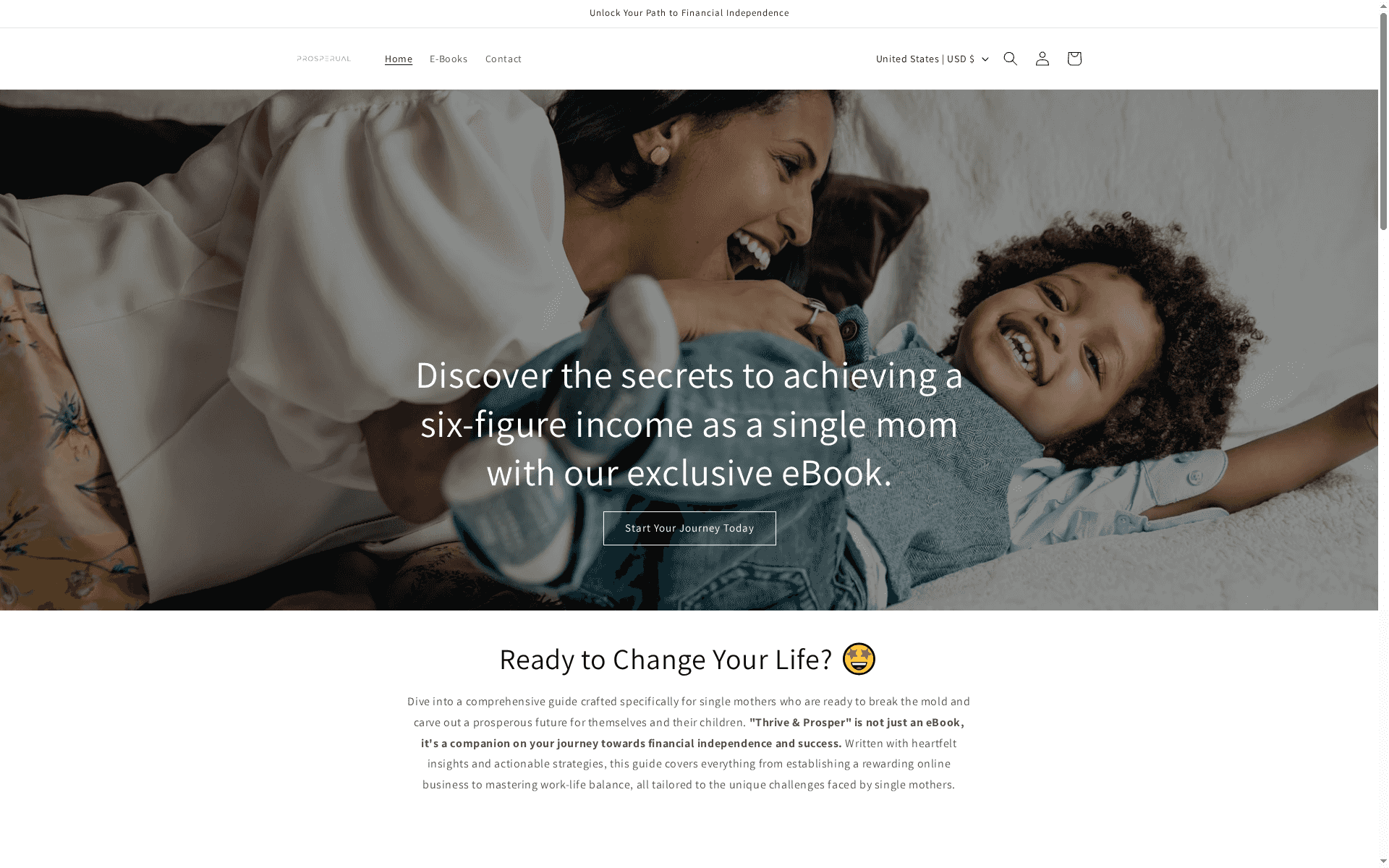
At Prosperual, we understand the exact hurdles you face when launching an online business from home. Our signature program, Thrive and Prosper, empowers single mothers with practical strategies for starting and scaling e-commerce ventures. We cover everything from setting up your store and managing payments to mastering digital marketing and business compliance. Don’t wait to transform your skills and passions into steady income — visit Prosperual to start building your future today. Your journey to financial independence and flexible entrepreneurship begins now.
Frequently Asked Questions
What is e-commerce?
E-commerce, or electronic commerce, is a digital business model that enables the buying and selling of products and services over the internet. It includes various transaction types like business-to-consumer (B2C) and business-to-business (B2B).
What are the core components of a successful e-commerce business?
Successful e-commerce businesses typically have intuitive website design, secure payment gateways, user-friendly product catalogs, efficient inventory management, and streamlined shipping and logistics processes.
What are the different types of e-commerce models?
The four primary e-commerce models are Business to Consumer (B2C), Business to Business (B2B), Consumer to Consumer (C2C), and Consumer to Business (C2B), each defining how transactions occur between different parties.
What are the legal requirements for starting an e-commerce business?
Legal requirements for e-commerce include business registration, sales tax collection, data privacy compliance, consumer protection regulations, and adherence to intellectual property laws. Consulting legal and financial professionals is advisable for navigating these regulations.