

Financial Planning for Single Moms: Build Wealth Step-by-Step
Nearly 60 percent of single moms say financial stress is their biggest challenge, yet most have never created a detailed money plan. Understanding your finances is not just about paying the bills. It is the key to gaining control, building stability, and moving toward real independence. This simple, step-by-step approach shows how you can track where every dollar goes, set clear goals, and discover new income sources to change your family’s future.
Table of Contents
- Step 1: Assess Your Financial Situation
- Step 2: Set Achievable Money Goals
- Step 3: Create a Flexible Spending Plan
- Step 4: Unlock Extra Income Opportunities
- Step 5: Monitor Progress and Adjust Plan
Quick Summary
| Key Point | Explanation |
|---|---|
| 1. Assess Your Financial Situation | Gather documents and track your income and expenses to understand your financial landscape and calculate your net worth. |
| 2. Set Achievable Money Goals | Use the SMART framework to define short-term, intermediate, and long-term financial goals that align with your personal values. |
| 3. Create a Flexible Spending Plan | Divide your income into essential expenses, financial goals, and discretionary spending while allowing buffer zones for flexibility. |
| 4. Unlock Extra Income Opportunities | Explore online freelancing, gig economy jobs, and leverage your existing skills to create additional income streams for financial resilience. |
| 5. Monitor Progress and Adjust Plan | Schedule monthly check-ins to review your budget, track your financial progress, and adjust plans as needed for ongoing growth. |
Step 1: Assess Your Financial Situation
This step is about getting real with your money situation right now. You will create a snapshot of your current financial landscape that will help you build a roadmap to financial freedom.
Start by gathering all your financial documents. Grab your bank statements, pay stubs, credit card bills, loan documents, and any other paperwork showing your income and expenses. According to the FDIC research on single parent financial resilience, understanding your complete financial picture is crucial for building stability.
Next, track every single dollar that comes in and goes out. Create a simple spreadsheet or use a free budgeting app to list your monthly income sources. This includes your primary job salary, any child support, side hustle earnings, or government assistance. On the expense side, break down everything you spend money on personal expenses, childcare, housing, transportation, food, and miscellaneous costs.
Calculate your net worth by subtracting your total debts from your total assets. Add up the value of everything you own (savings, investments, property) and subtract what you owe (credit card balances, loans, mortgages). This number might feel uncomfortable at first, but it is just a starting point.
Pro Tip: Be honest and judgment free. Your financial snapshot is a tool for growth, not a report card.
Review your credit report for free from the major credit bureaus. Check for any errors and understand your current credit score. The Consumer Financial Protection Bureau’s ‘Your Money Your Goals’ toolkit offers excellent resources for tracking and understanding your financial health.
In the next step, we will use this assessment to create a strategic budget that transforms your financial reality.
Step 2: Set Achievable Money Goals
Now that you understand your current financial landscape, it is time to map out a future that transforms your financial reality. Setting clear money goals will help you turn your financial dreams into actionable plans.
Research from New Mexico State University recommends creating goals across different timeframes. Start by breaking down your financial objectives into short-term, intermediate, and long-term categories. Short-term goals might include building a $1000 emergency fund or paying off a small credit card balance. Intermediate goals could involve saving for a car down payment or setting aside money for your child’s extracurricular activities.
When crafting your goals, follow the SMART framework recommended by the Consumer Financial Protection Bureau’s ‘Your Money, Your Goals’ toolkit. This means making your goals Specific, Measurable, Achievable, Relevant, and Time-bound. Instead of saying “I want to save money,” reframe it as “I will save $200 per month for the next six months to build a $1200 emergency fund.”
Prioritize your goals based on your personal values and family needs. As a single mom, your priorities might include creating financial stability, investing in your children’s future, or developing additional income streams. Write down each goal and attach a realistic timeline and specific dollar amount.
Pro Tip: Review and adjust your goals quarterly. Financial planning is a dynamic process, not a one-time event.
Remember that your goals should challenge you without causing overwhelming stress. Start small, celebrate every milestone, and build momentum. Each successful goal will boost your confidence and financial resilience.

In the next step, we will dive into creating a budget that supports these goals and turns them from dreams into reality.
Step 3: Create a Flexible Spending Plan
Your financial journey needs a roadmap that adapts to your changing life as a single mom. A flexible spending plan will help you manage your money smartly while giving you room to breathe and adjust.
According to the Spending, Savings, and Future guide, creating a flexible budget means tracking your income and expenses while building in wiggle room for unexpected situations. Start by dividing your monthly income into three core categories: essential expenses, financial goals, and discretionary spending.
For essential expenses, prioritize consistent costs like housing, utilities, childcare, transportation, and groceries. Aim to keep these expenses around 50% of your total income. Financial goals should consume about 20% of your income, covering emergency savings, debt repayment, and investment contributions.
The Consumer Financial Protection Bureau’s ‘Your Money, Your Goals’ toolkit recommends using the remaining 30% for discretionary spending. This includes personal expenses, entertainment, and occasional treats for you and your children. The key is balance not perfection.
Pro Tip: Use cash envelopes or separate bank accounts for each spending category to prevent overspending.
Build flexibility into your plan by creating buffer zones in your budget. Set aside a small amount for unexpected expenses or income fluctuations. This approach turns financial surprises from stressful events into manageable moments.
Remember that your spending plan is a living document. Review and adjust it monthly, celebrating your wins and learning from challenges. Your financial plan should support your life not constrain it.
In the next step, we will explore strategies to increase your income and accelerate your financial growth.
Step 4: Unlock Extra Income Opportunities
Additional income streams can transform your financial reality and provide the flexibility single moms desperately need. By strategically exploring multiple earning opportunities, you can build financial resilience and create more breathing room in your budget.
According to FDIC research on single parent financial resilience, mobile technology has opened up unprecedented opportunities for generating supplemental income. Start by exploring digital platforms that offer flexible work options. Consider online freelancing through platforms where you can offer writing, graphic design, virtual assistance, or tutoring services.
Look into gig economy opportunities that fit around your parenting schedule. Food delivery services, rideshare driving during school hours, and task completion apps can provide quick cash without requiring a fixed commitment. Online surveys, user testing websites, and microtask platforms can also generate small but consistent additional income.
Leverage your existing skills and network. Could you offer weekend childcare for other working parents? Do you have specialized knowledge you could teach online through platforms like Udemy or Skillshare? Consider selling handmade items, digital products, or offering consulting services in your area of expertise.
Pro Tip: Always calculate the true cost of a side hustle including time investment, childcare needs, and potential tax implications.
Create a dedicated workspace and set clear boundaries between your primary job, parenting responsibilities, and income generation activities. Use productivity tools and time management strategies to maximize your earning potential without sacrificing family time.
Remember that building additional income streams is a marathon not a sprint. Start small, be consistent, and gradually expand your opportunities as you gain confidence and skills.
In the next step, we will explore how to protect and grow the income you are working so hard to generate.
Step 5: Monitor Progress and Adjust Plan
Financial planning is not a one-time event but an ongoing journey of growth and adaptation. This step is about creating a system to track your financial progress and make strategic adjustments as your life evolves.
According to the Consumer Financial Protection Bureau’s ‘Your Money, Your Goals’ toolkit, effective financial monitoring requires consistent and structured review. Schedule a monthly financial check-in with yourself. Set a specific time each month to review your budget, track your spending, and assess your progress towards your financial goals.
The Spending, Savings, and Future guide recommends creating a simple tracking system. Use a spreadsheet or a budgeting app to log your income, expenses, savings, and debt repayment. Visual tracking can help you see your progress and stay motivated. Compare your actual spending against your planned budget and identify areas where you might be overspending or can optimize.
Be prepared to adjust your plan when life changes. Unexpected expenses, income shifts, or new opportunities can require flexibility. Did you receive a raise? Redirect extra funds toward your financial goals. Facing an unexpected expense? Revisit your budget and find areas where you can temporarily reduce spending.
Pro Tip: Treat your financial plan like a living document. Perfection is not the goal progress is.
Celebrate your wins no matter how small. Paid off a credit card? Saved an extra $100 this month? Acknowledge these achievements. Positive reinforcement helps build momentum and keeps you motivated on your financial journey.
Remember that financial growth is rarely linear. Some months will be better than others, and that is completely normal. Stay patient, stay consistent, and trust the process.
In the final step, we will discuss how to build long-term wealth and create a sustainable financial future for you and your family.
Here’s a summary of each financial planning step and its key actions:
| Step | Focus Area | Key Actions |
|---|---|---|
| 1. |
Assess Your Financial Situation | Understand finances | Gather all financial documents
Track income and expenses
Calculate net worth
Check credit report |
| 2. Set Achievable Money Goals | Define objectives | Set short-term, intermediate, and long-term goals
Use SMART framework
Prioritize based on family needs |
| 3. Create a Flexible Spending Plan | Budget management | Divide income into essentials, goals, discretionary
Create buffer zones for flexibility
Review budget monthly |
| 4. Unlock Extra Income Opportunities | Increase earnings | Explore digital platforms
Consider gig economy jobs
Leverage skills and network |
| 5. Monitor Progress and Adjust Plan | Ongoing review | Schedule monthly check-ins
Track income and expenses
Adjust plan as needed |
Take Control of Your Financial Future Today
Being a single mom means facing unique financial challenges like managing unpredictable expenses, setting realistic goals, and finding flexible income opportunities that fit your busy life. The article highlights how crucial it is to build a clear financial snapshot, set achievable money goals, and create a spending plan that adapts as life changes. But knowing what to do is only the beginning.
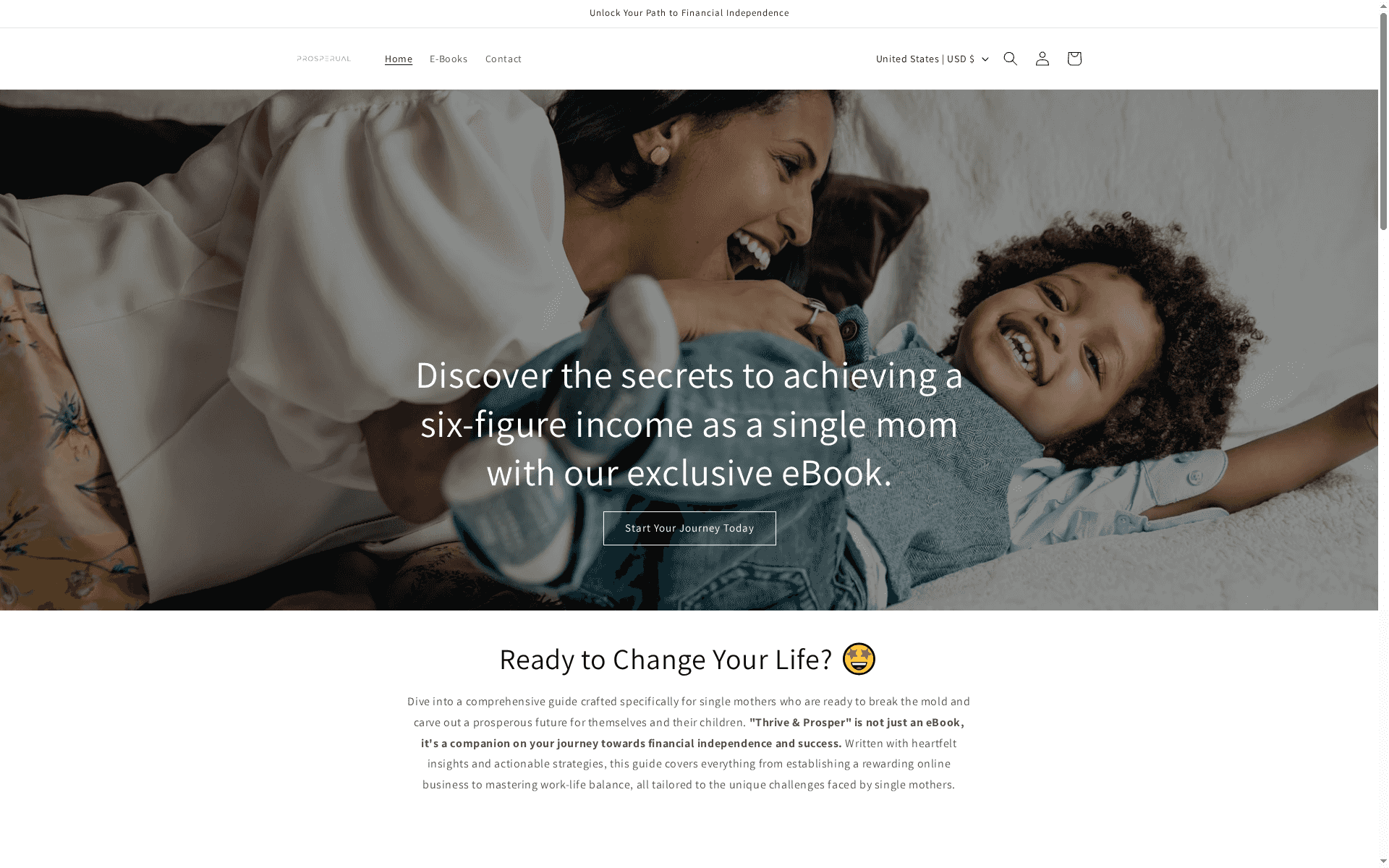
At Prosperual, we understand the emotional weight of financial uncertainty and the determination it takes to create lasting wealth for you and your children. Our flagship program, Thrive and Prosper, guides you step-by-step through building money management skills, unlocking new income streams, and harnessing modern tools like AI to support your path out of the 9-5 grind. Ready to move from financial stress to confidence and growth? Visit Prosperual now and start embracing a flexible plan that works with your life, not against it. Your journey to financial empowerment begins here.
Frequently Asked Questions
What are the first steps I should take to assess my financial situation as a single mom?
Start by gathering all your financial documents, including bank statements, pay stubs, and loan paperwork. Track every dollar that comes in and goes out by creating a budgeting spreadsheet to get a clear picture of your income and expenses.
How can I set achievable financial goals as a single mom?
Break your financial objectives into short-term, intermediate, and long-term goals using the SMART framework. For instance, aim to save $200 per month to build a $1,200 emergency fund over six months.
What should I include in my flexible spending plan?
Your flexible spending plan should include categories for essential expenses, financial goals, and discretionary spending. Aim to allocate around 50% of your income for essentials, 20% for financial goals, and 30% for discretionary expenses, adjusting as needed for flexibility.
What are some effective ways to unlock extra income opportunities as a single mom?
Explore digital platforms for freelancing, such as offering writing or tutoring services, or consider gig economy jobs like food delivery. Focus on leveraging your existing skills and network to identify income opportunities that fit your schedule.
How can I monitor my financial progress effectively?
Schedule a monthly financial check-in to review your budget, track income and expenses, and assess your progress towards goals. Use a simple tracking system, like a spreadsheet, to ensure you stay on top of your financial growth and make necessary adjustments.
What actions should I take if my financial situation changes?
Be prepared to adjust your financial plan when life changes, such as unexpected expenses or income shifts. For example, if you receive a raise, redirect that extra income towards your financial goals for a more secure future.